Categories
QUESTIONS

“MUST WE ALWAYS FINISH LAST?” (Mt 11:11-15): 13 December 2007 (St. Lucy, Thursday)

“MUST WE ALWAYS FINISH LAST?”  (Mt 11:11-15):  13 December 2007 (St. Lucy, Thursday)

Reading:  www.nccbuscc.org/nab/121307.shtml

Woody Allen’s 1989 film “Crimes and Misdemeanors” is about  two men who can’t be more different from one another.  The first is an eye doctor named Judah (played by Martin Landau), whose mistress (Angelica Huston) is enraged when she realizes that contrary to promises made earlier, he will not leave his wife to live with her.  In retaliation, she resorts to blackmail and threatens to ruin his reputation.  Desperate, Judah decides to hire someone to kill her.  But instead of getting caught and punished, or even just losing sleep over his crime, Judah manages to move on.  The crisis lifts, and to his surprise, his life even prospers.

Categories
QUESTIONS

“WHAT WOULD YOU SEND ME?” (Lk 1:39-47): 12 December 2007 (The Virgin of Guadalupe, Wednesday)

“WHAT WOULD YOU SEND ME?”  (Lk 1:39-47):  12 December 2007 (The Virgin of Guadalupe, Wednesday)

Reading:  www.nccbuscc.org/nab/121207.shtml

We don’t always notice it, but the gospels often depict Mary as being “on the move.”  Today’s reading tells us that immediately after the Annunciation, Mary “set out and traveled to the hill country of Judah” to visit her cousin Elizabeth.  As we know, for the birth of Christ, she traveled with her husband Joseph to Bethlehem.  Almost immediately after that, they escaped to Egypt before returning to Nazareth.  According to Luke’s gospel, when Jesus was twelve, the entire family went to Jerusalem for a pilgrimage to the temple.  Finally, the gospel according to John reports that she traveled down to Jerusalem to be with her son in his final moments.

Today’s feast reminds us that to this day, Mary hasn’t really stopped traveling.  Her Visitation to Elizabeth has been but the first of many that she continues to make.  One internet source claims that the more famous Marian apparitions number all of 67 although not all of them are considered official by the Church.  These apparitions have occurred as early as the year 39 AD (before her Assumption) when she allegedly appeared to St. James in Caesaraugusta (present-day Zaragoza, Spain) up to the very present.  After her Assumption, our Lady has been claimed to travel to places like Banneaux (Belgium), Lourdes and La Salette (France), Fatima (Portugal), and Medjugorie (Bosnia & Herzegovina) , as well as Akita (Japan) and Garabandal (Spain).  Lesser known places she has supposedly visited include Bayside in New York, Zeitoun in Egypt, La Vang in Vietnam, and even our own Lipa City.  It’s almost as if Mary has simply refused to leave her children behind.

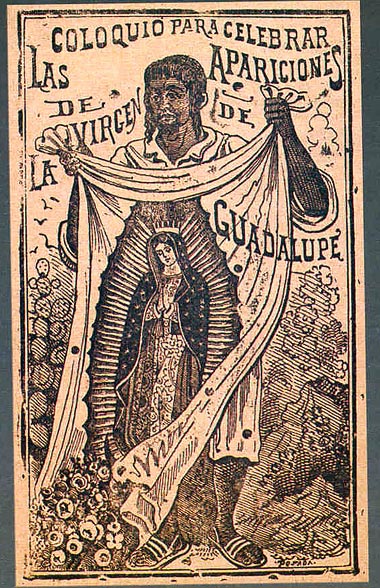
The Feast of the Virgin of Guadalupe recalls a famous visitation  in Mexico.  In the year 1531, she appears to the peasant Juan Diego and requests him to relay her wish to the bishop that a temple be built on the site.  Naturally, the bishop refuses to believe such a tale and asks for a sign.  The sign is given:  With a piece of cloth called tilma, Juan Diego gathers roses in winter and when he unravels his tilma, the roses come pouring out, and the image of Mary appears imprinted on the cloth.

What I like best about Guadalupe is it doesn’t have the usual doomsday messages associated with many Marian apparitions.  The Blessed Mother requests for a church, and when the unbelieving bishop understandably asks for a sign, what does she send him?  A bouquet of roses and the portrait of his mother.  It was the loveliest of gifts that a mother knows will melt the hardest of hearts.

Today I ask the Blessed Mother:  “What would you send me?  When I’m not listening and my heart is hard, what gift would you send me?”

During a retreat immediately before my own ordination in 1998, I was plagued with self-doubts, and I felt unworthy of ordination.  A recurring image in my prayer was that of a beggar who held an old rusty can of coins.  I felt I had nothing to offer God but the “loose change” of my life.

My prayers were uniformly distracted and dry.  On the very last day, I sat in the small chapel resigned to the possibility of a failed retreat and perhaps a failed vocation. I entertained thoughts of leaving the seminary a few months before ordination.

And then it happened–a powerful religious experience when it was least expected:  Suddenly, the fragrant scent of roses.  My first thought was:  “Mary.”  But almost simultaneously I heard an inner voice that had to belong to her:  “No, not me, but you.  Your offering is not a can of loose change, but a bouquet of the most fragrant roses.”

It was Mary’s gift for me when I faced the darkest of nights with the weakest of faith.  Typical of her, isn’t it?  I didn’t recognize it then, but looking back now, I know:  It was the grace of Guadalupe. In the cold of winter, I had unravelled my heart to God, and roses came pouring out, revealing her face.

(image: en.wikipedia.org)

There are affordable-papers.net two basic procedures of writing academic papers.

Categories
QUESTIONS

“WHAT WOULD YOU SEND ME?” (Lk 1:39-47): 12 December 2007 (The Virgin of Guadalupe, Wednesday)

“WHAT WOULD YOU SEND ME?”  (Lk 1:39-47):  12 December 2007 (The Virgin of Guadalupe, Wednesday)

Reading:  www.nccbuscc.org/nab/121207.shtml

We don’t always notice it, but the gospels often depict Mary as being “on the move.”  Today’s reading tells us that immediately after the Annunciation, Mary “set out and traveled to the hill country of Judah” to visit her cousin Elizabeth.  As we know, for the birth of Christ, she traveled with her husband Joseph to Bethlehem.  Almost immediately after that, they escaped to Egypt before returning to Nazareth.  According to Luke’s gospel, when Jesus was twelve, the entire family went to Jerusalem for a pilgrimage to the temple.  Finally, the gospel according to John reports that she traveled down to Jerusalem to be with her son in his final moments.

Categories
QUESTIONS

“WOULD YOU REALLY FOR ME?” (Mt 18:12-14): 11 December 2007 (Tuesday)

“WOULD YOU REALLY FOR ME?”  (Mt 18:12-14):  11 December 2007 (Tuesday)

Reading:  www.nccbuscc.org/nab/121107.shtml

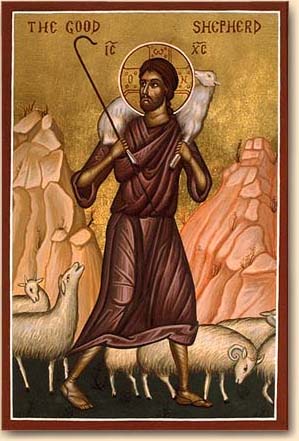
Whatever you do, don’t fall for this trick.  In today’s gospel, the Lord pulls a fast one on his disciples. He asks them:  “What is your opinion? If a man has a hundred sheep and one of them goes astray, will he not leave the ninety-nine in the hills and go in search of the stray?”  

Categories
QUESTIONS

“CAN YOU TAKE YOUR EYES OFF US?” (Lk 5:17-26): 10 December 2007 (Monday)

“CAN YOU TAKE YOUR EYES OFF US?” (Lk 5:17-26):  10 December 2007 (Monday)

Reading:  www.nccbuscc.org/nab/121007.shtml

One interesting film I saw months ago is “Closer,” a realistic and sometimes painful portrayal of what happens in people’s relationships.  But what has lingered long after the credits all these months is not so much the story or the characters, but this unfamiliar but hauntingly beautiful song called “The Blower’s Daughter” by Damien Rice (shown in photo).  The refrain is just really simple; it goes, “I can’t take my eyes off you,” but the line is repeated over and over and over again. Hearing it, one can’t help but be moved by the singer’s  obsessive, desperate need.

For some reason, I thought of this song when I read the gospel story today:  Jesus is busy teaching in someone’s house, and a slight commotion distracts him.  Before he knows it, a paralytic is lowered from the roof for him to heal.  The crippled man’s face catches his eye, and he can’t take his eyes off him.  If I were making a film, here is where the song begins to play.

Of course songwriter Damien Rice didn’t have this in mind  at all when he wrote the song.  There’s been a lot of interest in the meaning of this song in the internet because after all, who can guess what the ‘blower’s daughter’ means?  So far I’ve found the best answer in a blog that says it refers to the daughter of Damien’s clarinet teacher (Ah!).

But for our purposes, I think we can depart from the author’s intention.  There’s a principle in literary interpretation that says that after the text is written, “the poet is dead”–i.e., aside from the author’s intended meaning, there is also “text meaning,” which is an equally legitimate interpretation as long as it can be justified by the text.

Here’s my take on the song:  For me, the song may well apply to the Lord since it expresses how he feels about the world and about us.  Think about it:  He becomes human and as the first lines of the song, he tells his Father, “And so it is / just like you said it would be. / Life goes easy on me / most of the time.”

It’s an almost ordinary life he leads, but when he gazes upon his Father’s world–the sky, the oceans, the universe–and especially when he sees us, his Father’s sons and daughters, with all our hopes and dreams mixed with all our fears and pains, he is smitten.  He is helpless. He gets weak in the knees and can’t take his eyes off us.  He pretends to look away, and the song has a great phrase for it:  “The pupil in denial.”  He wants nothing more than to gather us in his arms and take away all our fears and pains and turn them into joy.

So today we ask him, “Can you take your eyes off us?”  And we know the question is rhetorical because the answer is obvious:  He can’t.  His love won’t permit him to.  Even as he hung on the cross, his eyes remained fixed on us.  But then, we have to do our part to let him love us.   Like the paralytic whose friends had to climb a roof just to bring him to the Lord, we too have to find ways of getting to the Lord.  If we do, we can be sure that he will not turn away from us.  He can’t.  His love won’t let him.

Note:  I’ve uploaded the song.  If you’re up to it, take a listen and imagine the Lord singing it–first to God, then to you.  The “blower’s daughter” can refer to God’s creation, most especially ourselves, whom the Lord has been calling on to turn around and return to the Father.  Some people don’t like the way the song ends because it says, “I can’t take my mind off you…`till I find somebody new.”  But it applies to the Lord when you think about it since he has to keep his eye on so many of us.

I’m also posting the lyrics below for your reference.  If you wish, you can watch the music video, too.  It doesn’t hurt too that I think Damien resembles our usual images of Christ.

“The Blowers Daughter”
(from azlyrics.com)

And so it is
Just like you said it would be
Life goes easy on me
Most of the time
And so it is
The shorter story
No love, no glory
No hero in her sky

I can’t take my eyes off of you
I can’t take my eyes off you
I can’t take my eyes off of you
I can’t take my eyes off you
I can’t take my eyes…

And so it is
Just like you said it should be
We’ll both forget the breeze
Most of the time
And so it is
The colder water
The blower’s daughter
The pupil in denial

I can’t take my eyes off of you
I can’t take my eyes off you
I can’t take my eyes off of you
I can’t take my eyes off you
I can’t take my eyes…

Did I say that I loathe you?
Did I say that I want to
Leave it all behind?

I can’t take my mind off of you
I can’t take my mind off you
I can’t take my mind off of you
I can’t take my mind off you
I can’t take my mind…
My mind…my mind…
‘Til I find somebody new

(image:  weblogs.newsday.com)